
On 6 March 2026, the professional development programme “Psychological Assistance, Social Support and Comprehensive Rehabilitation of Military Personnel and War Veterans,” which had been running since 2 February, was successfully completed. The programme became one of the practical platforms for integrating the conceptual foundations of the research project of the Ministry of Education and Science of Ukraine “Transformation of Military Experience into Social Leadership: An Internationalized Model of Veteran Empowerment as Agents of Social Change.”
The programme was developed by Olesia Tovstukha, Associate Professor at the Department of Psychology and a member of the project team. Participants from different regions of Ukraine included psychologists, specialists supporting war veterans and demobilized persons, as well as representatives of the healthcare and business sectors. This cross-sectoral composition brought together diverse professional perspectives on supporting veterans and facilitating their reintegration into civilian life.
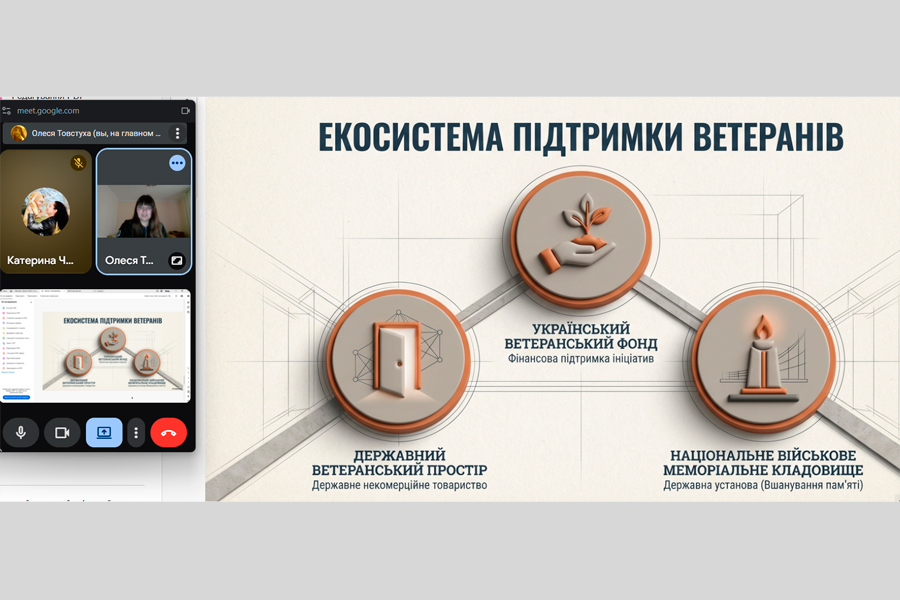
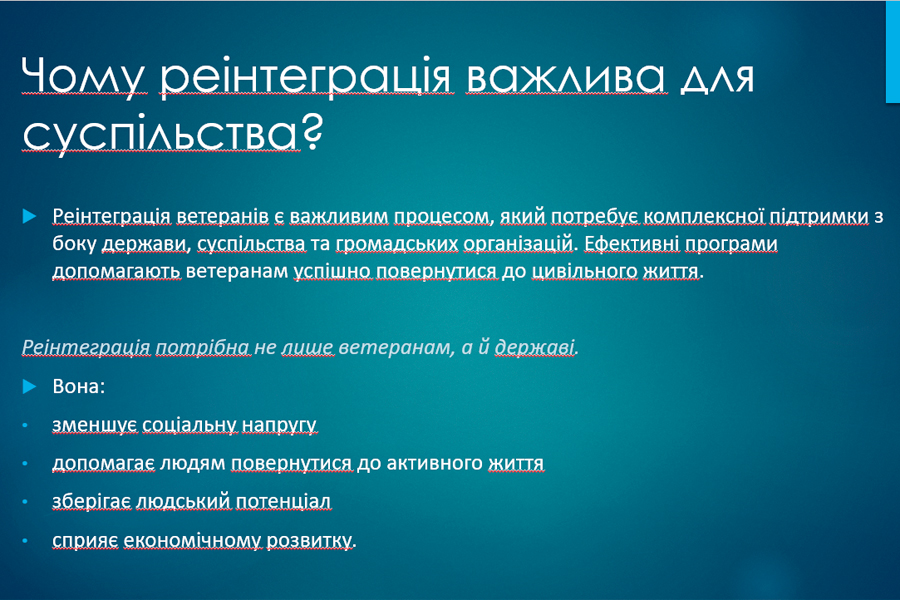
The project’s conceptual framework was integrated into the programme content, which addressed crisis situations and crisis response, traumatic stress and psychological trauma among military personnel and veterans, psychological support for veterans and their family members, needs assessment and the design of psychosocial support measures, comprehensive rehabilitation, and the development of individual rehabilitation plans.
Particular attention was given to the psychosocial aspects of veterans’ return to civilian life and innovative approaches to their support, taking into account the experience of NATO countries. This made it possible to consider reintegration not only through the lens of psychological assistance and rehabilitation, but also within the broader context of restoring veterans’ social agency, developing their potential, and promoting their participation in community life.
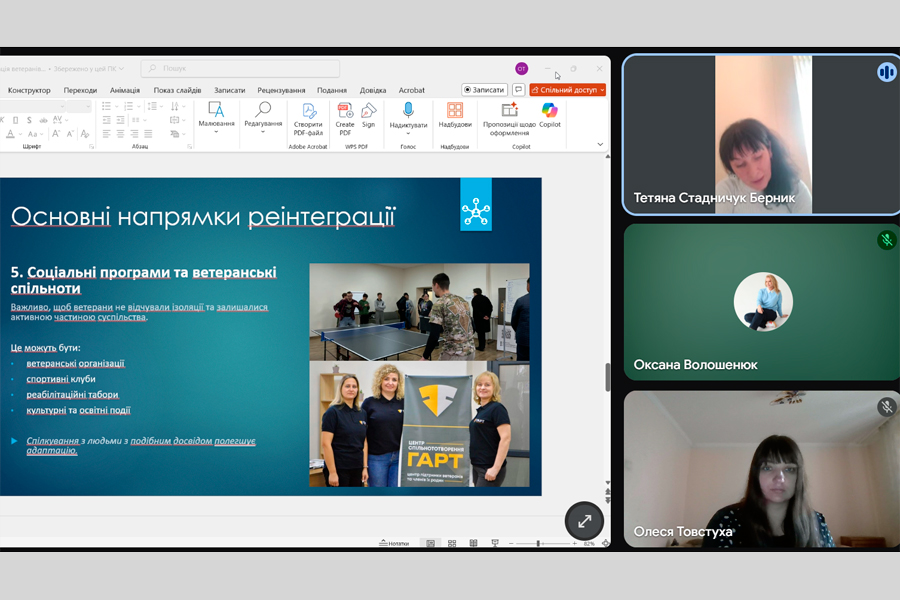
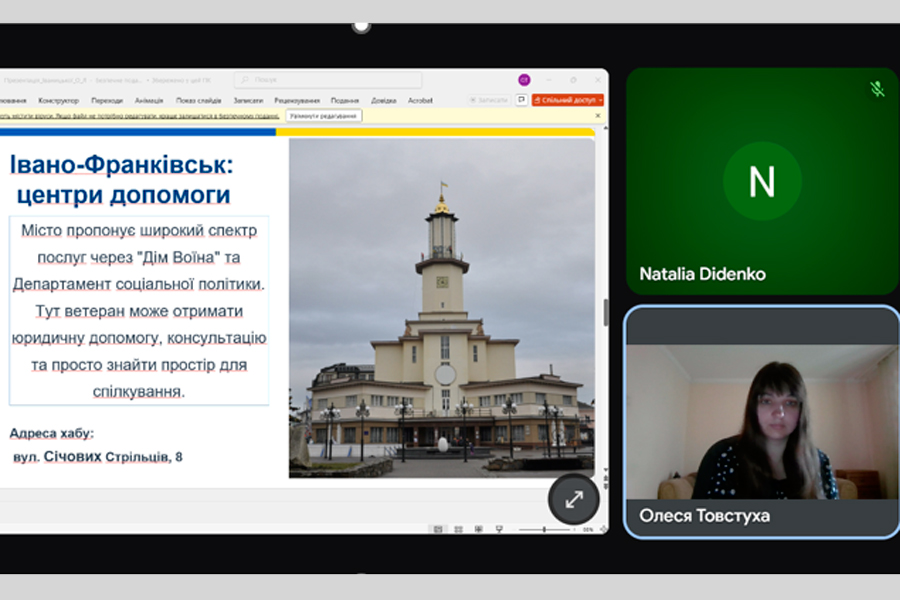
An important component of the final assessment focused directly on the project’s core issues. Participants’ final assignments consisted of two parts: a presentation on “War Veterans as a Vulnerable Category of Clients” and a project presentation entitled “Veterans as Agents of Social Change.”
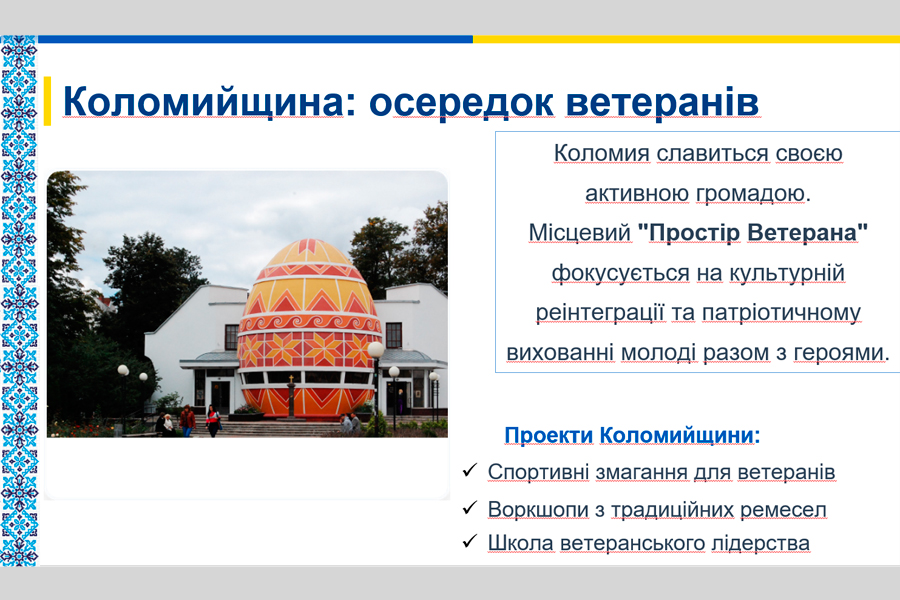
The works presented combined professional knowledge with practical experience of veteran reintegration across different regions of Ukraine. The exchange of regional practices provided an opportunity not only to discuss existing support models, but also to reflect on the conditions under which veterans’ experience can be transformed into a resource for civic engagement and social leadership.
The programme became one of the practical formats for implementing the project, integrating its conceptual principles into the professional development of specialists who work directly with the veteran community. Combining psychological assistance, social support, international experience, and an approach that views veterans as potential agents of social change provides a foundation for the further piloting and dissemination of the project’s findings and approaches.