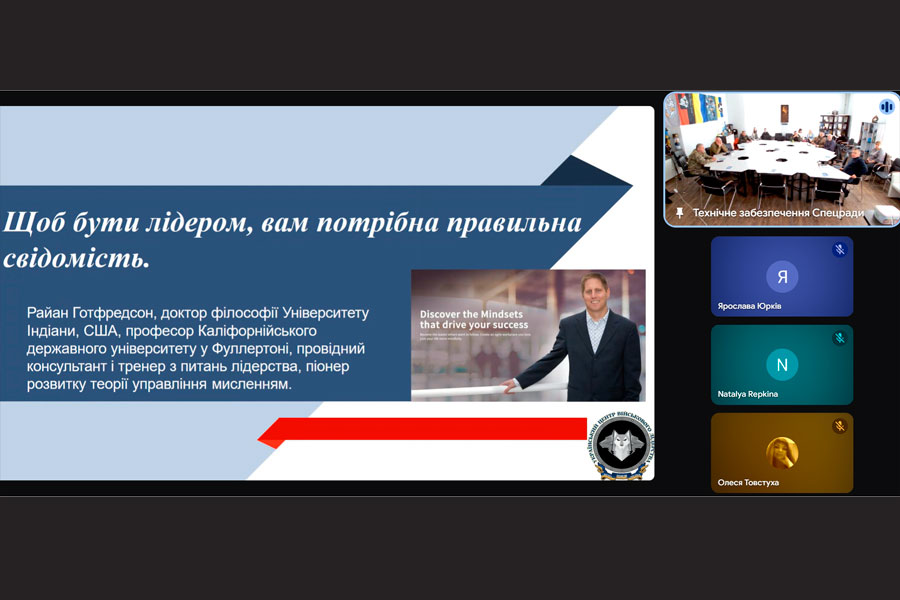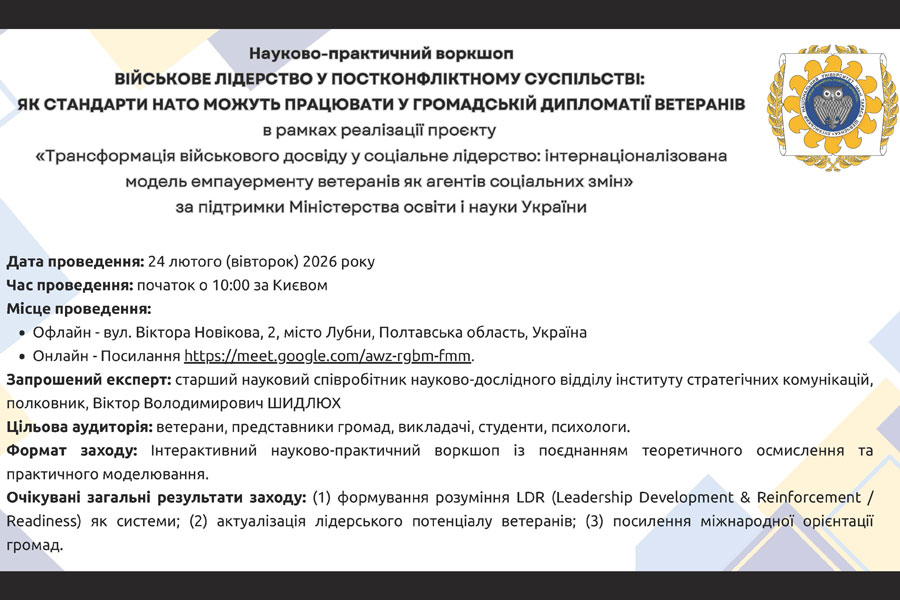
On 24 February, the project team, led by V. S. Kurylo and with organizational support from Ya. I. Yurkiv and I. V. Myhovych, held the research and practice workshop “Military Leadership in a Post-Conflict Society: How NATO Standards Can Work in Veterans’ Public Diplomacy” as part of the project “Transformation of Military Experience into Social Leadership: An Internationalized Model of Veteran Empowerment as Agents of Social Change,” supported by the Ministry of Education and Science of Ukraine.
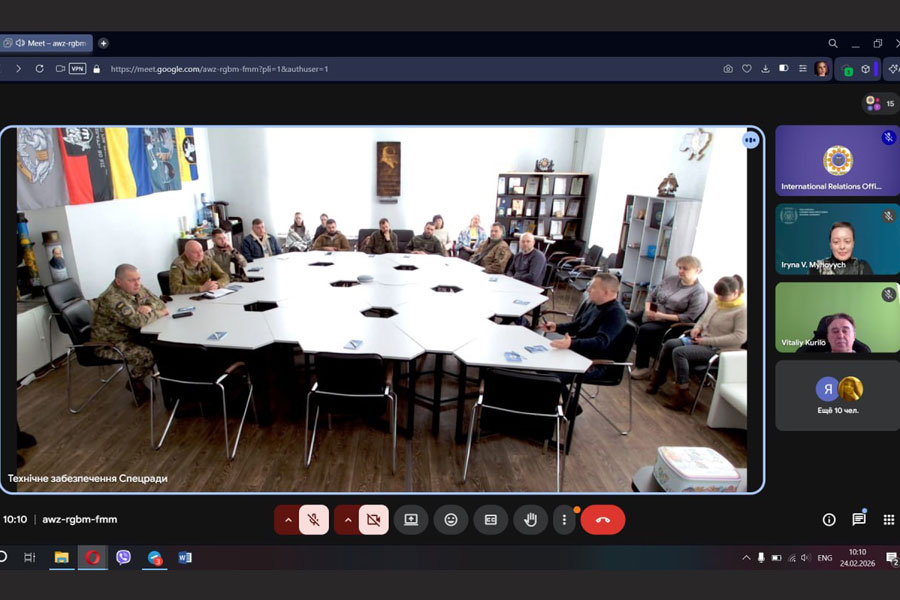
The event brought together representatives of various professional and social groups, including veterans, representatives of territorial communities, academic staff, mental health professionals, and students. The invited expert was Colonel Viktor Volodymyrovych Shydliukh, Senior Research Fellow at the Research Department of the Institute of Strategic Communications.
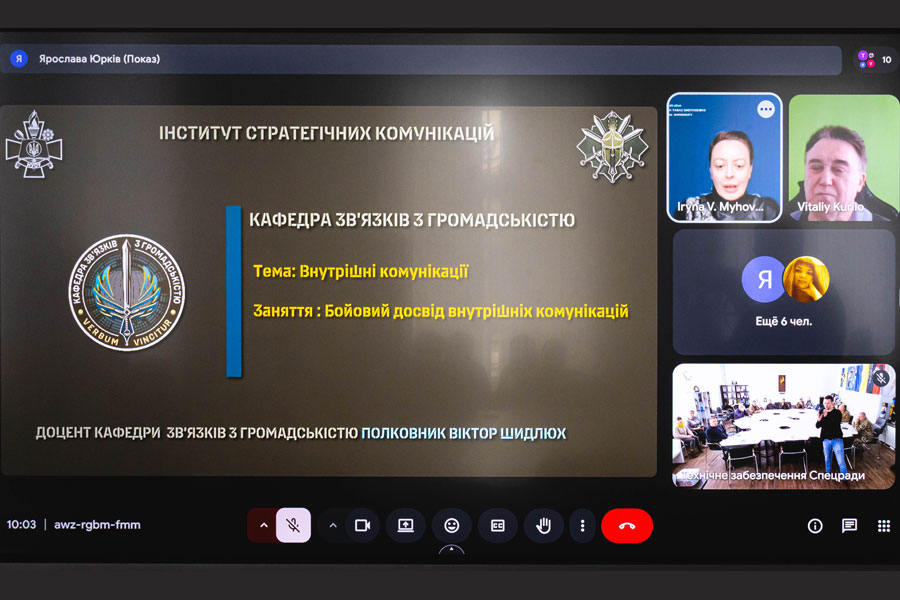
The conceptual core of the event was LDR (Leadership Development & Reinforcement / Readiness) as a system for developing military leadership that is implemented not only through the individual competencies of commanders, but primarily through an institutionalized culture of responsibility, trust, and initiative. This culture is built on the principles of mission command, the After Action Review methodology, and the systematic strengthening of organizational readiness.

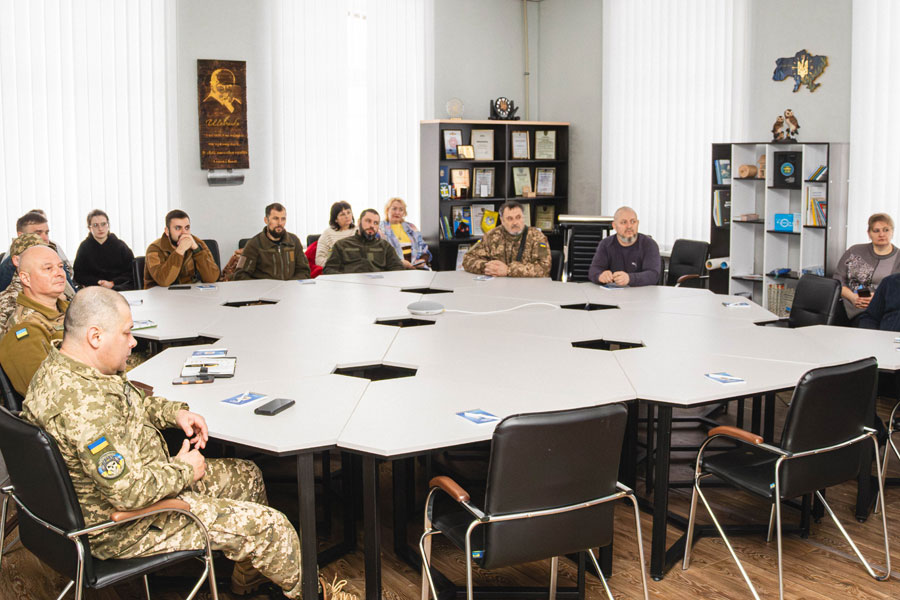
A separate segment of the event focused on exploring the phenomenon of veteran leadership in an international context. The analysis of coalition experience and NATO standards addressed the role of veterans as potential agents of intercultural communication, mediators, and representatives of local communities within international partnerships. Throughout the workshop, participants made a conceptual transition from the position of a “participant in events” to that of an “agent of action” capable of initiating and structuring international cooperation. Thus, the event served not only as an educational and awareness-raising platform, but also as a research space for critical reflection on international approaches to developing veterans’ leadership competencies through the lens of the local sociocultural context and the institutional capacities of Ukrainian society. The implementation of such activities demonstrates that the University is consistently developing an internationalized model of engagement with the veteran community, combining academic reflection, international experience, and the practical design of social change.
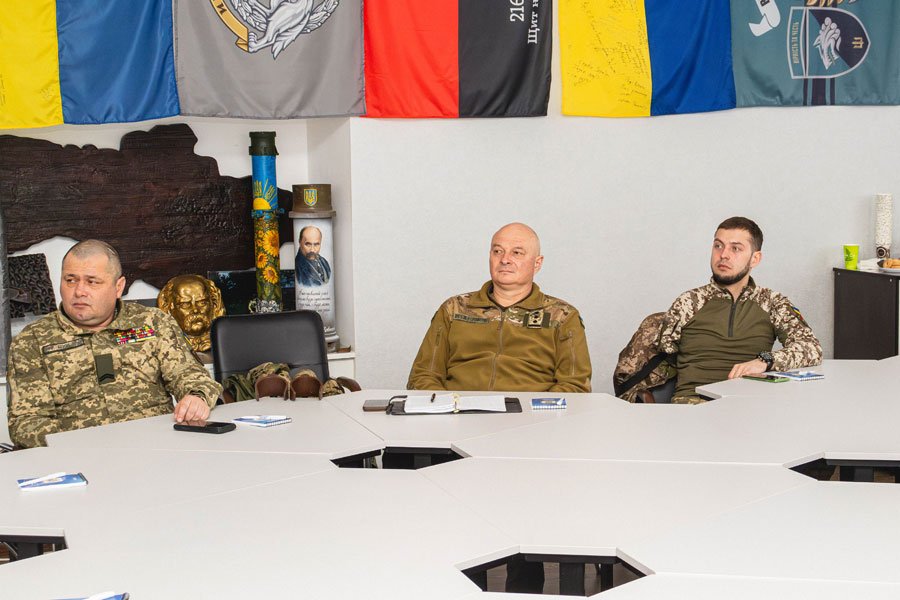
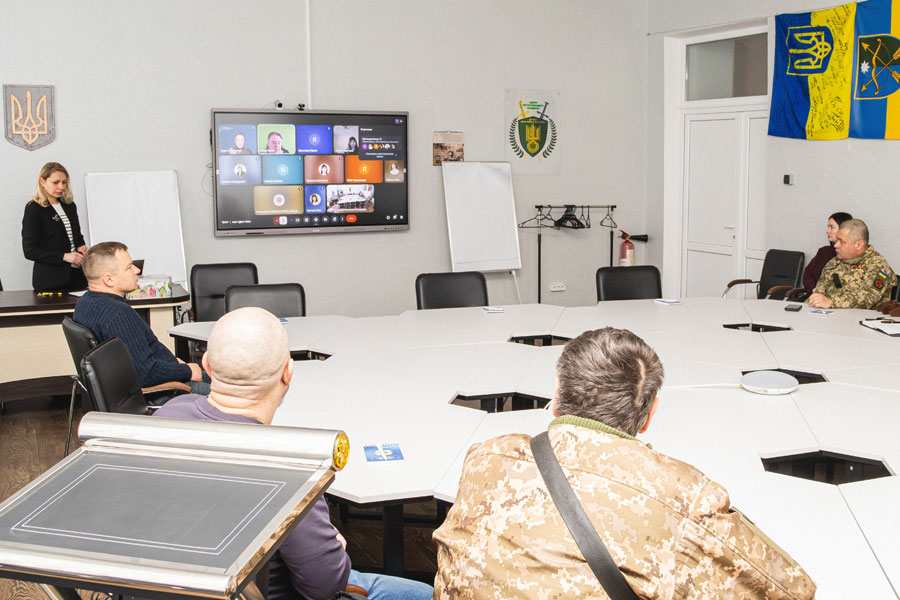
In the context of the project, the date of 24 February carries particular symbolic significance. It marks not only historical memory but also highlights the research and practical task of transforming military and post-conflict experience into a structured resource for social development. This transformative logic—from reflection on traumatic experience to its institutionalization in the form of leadership competencies—constitutes the conceptual core of the project.